
















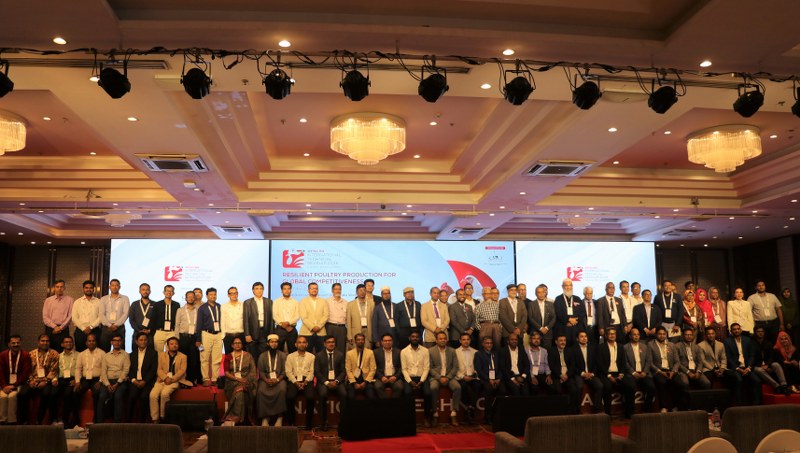
Special Correspondent: Building a resilient, safe, sustainable and globally competitive poultry industry in Bangladesh came into sharp focus at the International Technical Seminar 2026 organised by the World’s Poultry Science Association–Bangladesh Branch (WPSA-BB) on Saturday (October 3) at Radisson Blu Water Garden Hotel, Dhaka.
Held under the theme “Resilient Poultry Production for Global Competitiveness,” the day-long technical seminar brought together policymakers, researchers, academics and industry professionals to examine the economic, technical, safety, sustainability and trade-related challenges facing Bangladesh’s poultry sector.
The seminar began with registration and networking, followed by the inauguration session. Mr. Mohammad Fayzur Rahman, General Secretary, WPSA-BB, delivered the welcome address. Mr. Moshiur Rahman, President, BPICC, and Dr. Shakila Faruque, Director General (T.C.), BLRI, addressed the gathering as special guests, while Md. Shahzaman Khan, Director General (Acting), DLS, attended as the chief guest. The inaugural session was chaired by Mr. Shamsul Arefin Khaled, President, WPSA-BB.
The first technical session, titled “Poultry Economics and Production Performance,” was chaired by Dr. Nathu Ram Sarker, Executive Director, KGF, with Dr. Md. Boyzar Rahman, Director (Administration), DLS, serving as co-chair.
In this session, Mr. Shamsul Arefin Khaled, President, WPSA-BB, presented on “Bangladesh Poultry Economics: Costs, Productivity, Risks, Profits, Resilience, and Baseline.” The presentation focused on the broader economic dimensions of poultry production, including production costs, productivity, profitability, risks and resilience.
Mr. Md. Jahidul Islam, Director and CEO, Third Eye Agro Consultancy Hub, and Kitima Jindamongkon, Regional Manager, Gut Health, dsm-firmenich, jointly addressed “Broiler Production Paradox: Extreme FCR, Genetic Potential, Meat Quality, and Profitability.”
The second session, “Safety and Sustainability,” was chaired by Dr. Md. Bahanur Rahman, Dean, Faculty of Veterinary Science, BAU, with Prof. Dr. Md. Elias Hossain, Department of Poultry Science, BAU, as co-chair.
Prof. Dr. Emdadul Haque Chowdhury, Professor, Department of Pathology, BAU, presented “Broiler Meat Safety: Reconciling Concerns, Science, and Solutions,” addressing the scientific and practical dimensions of meat safety.
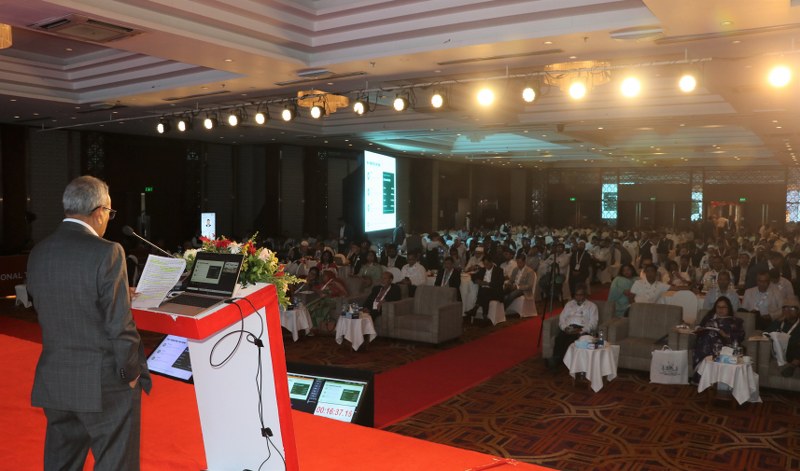
The session also featured Mr. Moshiur Rahman, President, BPICC, who presented “Climate-Smart Poultry Farming: From Carbon Footprint to Green Finance Through Carbon Credits.”
Following the lunch, prayer and networking break, the seminar resumed with the third technical session, “Compliance and Global Market Positioning.” The session was chaired by Dr. Md. Abul Hashem, Department of Animal Science, BAU, while Dr. Mohammed Abdus Samad, Principal Scientific Officer, BLRI, served as co-chair.
Prof. Dr. Mohammad Rafiqul Islam, Senior Technical Policy Specialist (One Health), FAO, delivered a presentation titled “Healthy Farms, Healthy Trade: Setting Standards and Monitoring Compliance.” The session subsequently turned to the export potential of Bangladesh’s poultry industry, with Ms. Baby Rani Karmakar, Joint Secretary, Ministry of Fisheries and Livestock, Government of Bangladesh, and Prof. Dr. Md. Mahmudul Hasan Sikder, Professor, Department of Pharmacology, BAU, presenting on “Unlocking Halal Poultry Export Opportunities from Bangladesh: Overcoming Compliance Gaps, Global Market Requirements, and Export Guidelines.”
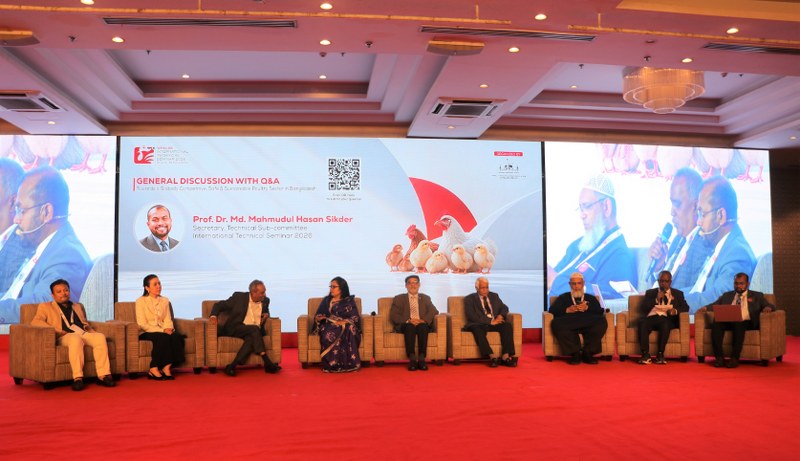
The seminar concluded its technical proceedings with a general discussion and question-and-answer session on “Towards a Globally Competitive, Safe, and Sustainable Poultry Sector in Bangladesh.” The discussion was moderated by Prof. Dr. Md. Mahmudul Hasan Sikder, Member-Secretary, Technical Sub-committee, International Technical Seminar 2026.
The closing ceremony featured remarks from Mr. Shamsul Arefin Khaled, President, WPSA-BB, followed by the vote of thanks and formal closure delivered by Prof. Dr. Md. Shawkat Ali, Convenor, Technical Sub-committee, International Technical Seminar 2026.
The technical programme reflected a comprehensive approach to strengthening Bangladesh’s poultry sector, covering farm-level productivity and economics, broiler genetics and meat quality, food safety, climate-smart production, regulatory compliance, international standards and halal export opportunities. Together, the sessions placed resilience and global competitiveness at the centre of discussions on the future development of Bangladesh’s poultry industry.