
















REPORT PREPARED BY AXON LTD, BANGLADESH
Information: VARIOUS SOURCES LOCAL & INTERNATION GOVERNMENT & PRIVATE ORGANIZTIONS.
DISCLAIMER: FEW INFORMATION MAY NOT BE CORRECT OR UPDATED & MANY COMPANY NAMES MAY NOT BE MENTIONED, SO APOLOGY FOR THAT
The poultry industry in Bangladesh evolved from traditional, backyard rearing in the early 20th century to a vibrant commercial sector, achieving self-sufficiency in meat and egg production today. Starting with government-improved breeds in 1935, the industry transitioned to intensive commercial farming in the 1990s, with a 15–20% annual growth rate. It now serves as a key economic engine, contributing to GDP and providing crucial nutrition.
Historical Evolution (1935–Today)
- 1935–1940s: Government began introducing improved poultry breeds for rearing, primarily focused on rural development.
- 1960s–1970s: Establishment of government poultry farms and initial, small-scale, modern farming efforts.
- 1980s: Introduction of the BRAC Rural Poultry Model, strengthening village-level production.
- 1990s–2000s: Rapid commercialization saw the entry of private sector breeder farms and hatcheries.
- 2010s–Today: The industry shifted from small to large-scale, automated production, with over 65,000+ farms and annual growth reaching 8-10% in recent years.
Current Status & Key Aspects
- Self-Sufficiency: The industry has attained self-sufficiency in meeting domestic demand for broiler meat and eggs.
- Economic Impact: The sector is a vital source of employment, particularly for rural women and youth, and provides affordable protein.
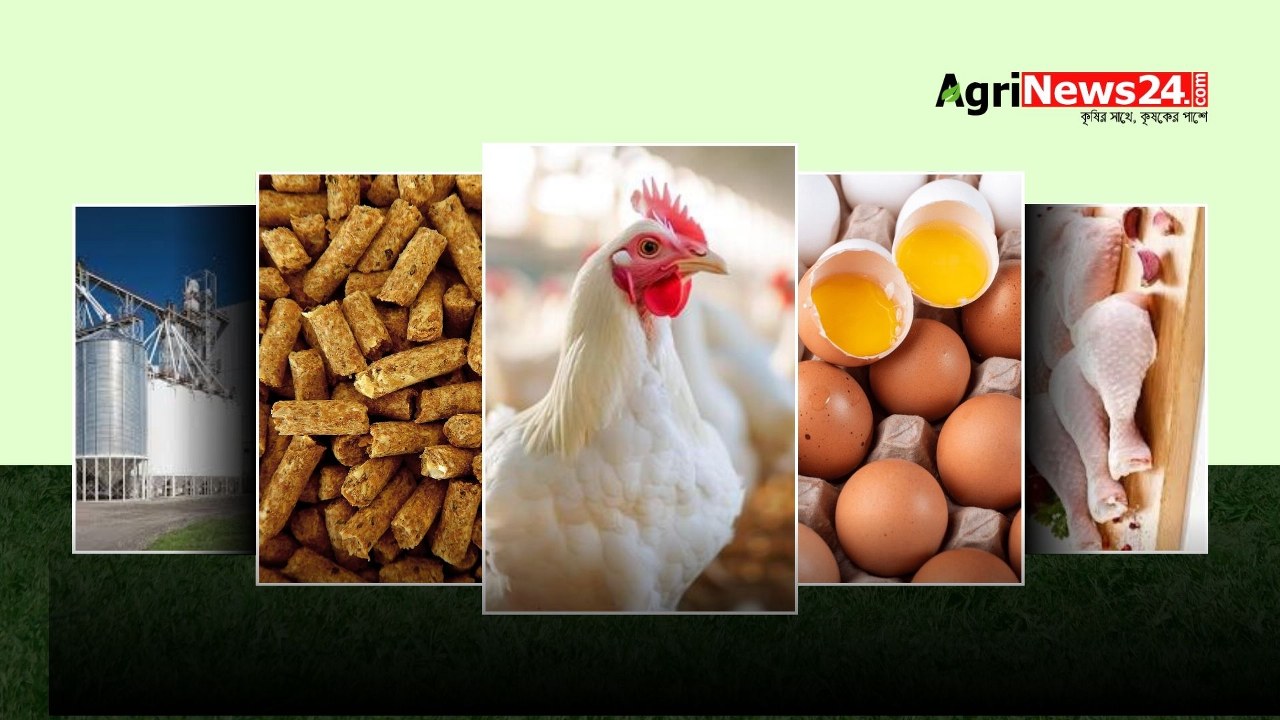
- Allied Industries: Growth has spurred related sectors, including poultry feed production, veterinary medicines, and processing plants.
- Production Figures: As of 2022-23, egg production reached 23.3 billion units.
- Challenges: The sector faces challenges from high feed costs, disease outbreaks (like bird flu), and the need for better technical skills.
The future of the industry lies in transforming towards safer, sustainable production and expanding export potential, despite current market challenges.
Key Statistics & Market Indicators (2025):
- Growth Rate: The industry expands at 8–10% annually, with commercial farms growing at roughly 15%.
- Production Capacity: Over 8 million eggs are produced daily (some estimates suggest 40-45 million, indicating high volatility or varying definitions of farm types).
- Consumption: Per capita consumption has reached approximately 9.945 kg of poultry meat and 126 eggs annually.
- Employment: The sector provides direct and indirect employment to approximately 6 million people.
- Sector Challenges: Despite growth, rising production costs and tax proposals (2025–26 budget) threaten stability, with many small/medium farms facing financial losses.
- Infrastructure: The industry is increasingly focused on modernization, with a strong market for processed meat.
The poultry sector remains crucial for achieving national self-sufficiency in meat and protein, with significant expansion in broiler and, to a lesser extent, layer, Sonali, and duck production.
- Poultry farmers in Bangladesh suffer huge financial loss
14 Jul 2025 — The BPA also reports that: * Around 10,000 small and medium farms have shut down during the period * Bangladesh produces 5,200 ton…
- Bangladesh launches first National Livestock Week 2025 …
Key 2025 Poultry Industry Statistics:
- Economic Contribution: The livestock sector (heavily dominated by poultry) contributes 1.81% to the national GDP at constant prices, with a 3.19% growth rate.
- Production Levels: The industry produces approximately 5,200 tons of poultry meat (broiler, Sonali, layer) and 40–45 million eggs daily.
- Small Farmer Crisis: Small farmers (producing ~3,000 tons of meat/day) are suffering, having lost ~USD 164 million in the latter half of 2024/early 2025 due to production costs exceeding market prices.
- Cost vs. Selling Price: Broiler production costs are USD 1.23–1.31/kg, but are sold for USD 0.90–0.99/kg. Eggs cost a minimum of USD 0.08 to produce but are sold for USD 0.05–0.06.
- Consumption: Per capita poultry consumption in Bangladesh is projected to rise.
- Employment: The sector provides direct employment for roughly 20% of the workforce and indirect (partial) employment for 50%.
Current Challenges:
- High Costs: Costs of day-old chicks, feed, and labour are driving up production costs.
- Market Volatility: Small farms are closing due to low sales prices and middlemen reaping high profits, threatening the sector’s sustainability.
Bangladesh poultry industry key companies from 1935 till 2026
Key Companies and Evolution (1935–2026)
- Early Era (1935–1970s): Initial, limited government-run farms and the introduction of improved breeds (1935), followed by poultry complexes like “Eggs and Hens” in 1964.
- Expansion Era (1980s): Key Players/Initiatives: While many early ventures were small, Usha Poultry, United, and Biman were notable names in early hatchery and feed operations followed by Paragon…etc.
- BRAC introduced the Rural Poultry Model (1983). Private sector involvement began in the early 90s, with companies like AFBL introducing dressed chicken.
- Modern Commercial Era (2000s–2026):
- Kazi Farms Group: Identified as a market leader in broiler production.
- CP Bangladesh Co. Ltd.: A major foreign company operating since 1999.
- Nourish Poultry: A major player in the feed and chick market.
- Other Key Entities: Aftab Bahumukhi Farms Ltd (ABFL), Savar Poultry Farm, and various large-scale breeder farms/hatcheries.
Industry Outlook (2026)
By 2026, the industry is expected to be a major contributor to the agricultural GDP, characterized by high-tech, integrated operations (feed, hatcheries, processing) and a strong focus on addressing biosecurity challenges like bird flu to maintain growth.